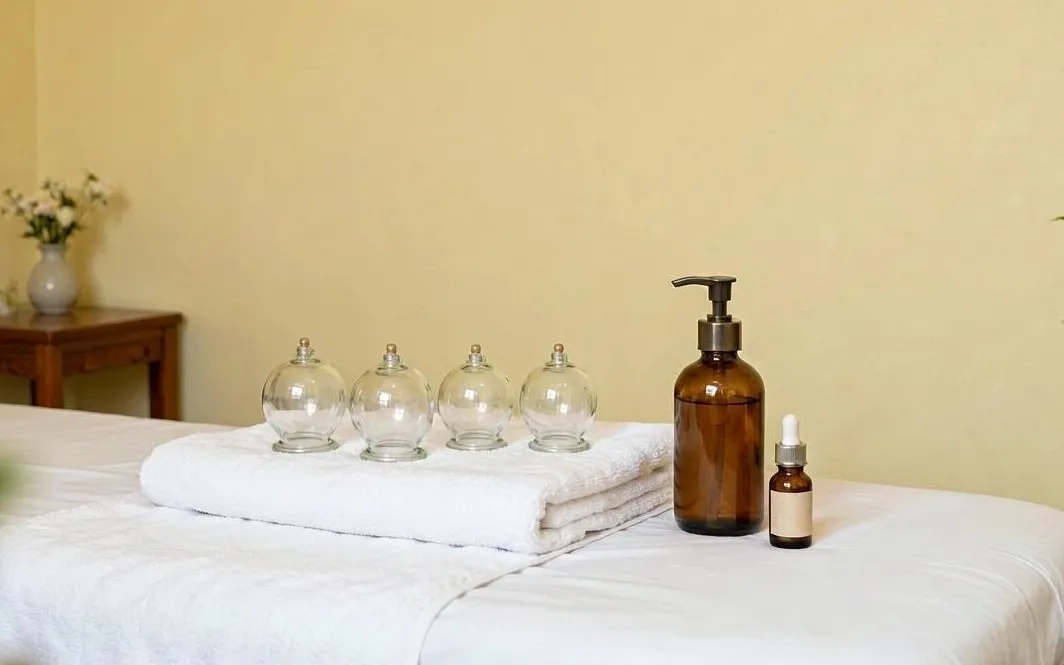
When the massage only lasts two days: cupping for a tight back
Loose after the treatment, tight again two days later. What cupping does differently, what it feels like and how long the marks stay.
Read more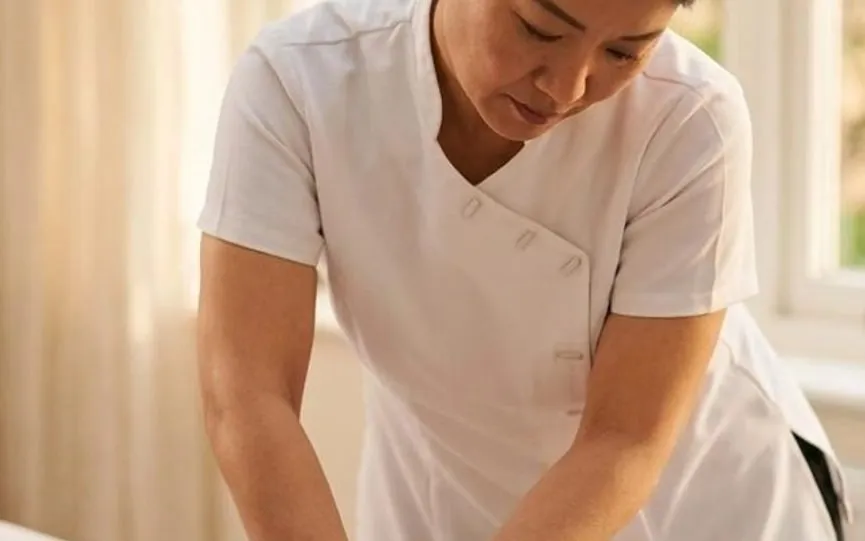
Sorted by what you feel, not by what the treatment is called.
It happens more often than you would think: someone opens the price list, reads cupping massage, Tuina, moxa, hot stone, foot reflexology, Gua Sha — and closes it again. Not because it was too expensive. Because ten names are sitting there and none of them says which one is yours.
First things first: you do not have to decide this in advance. Tell us at the appointment where it hurts and we will suggest something. That is the shorter route, and nobody holds it against you.
If you would like to know anyway, here is the mapping as we use it in the house.
Usually in the back or under the shoulder blade. It was gone once, and two days later it was back.
Tuina, if it may be firm. Strong, precise work, distinctly deeper than long strokes — the most intense treatment we have.
Cupping massage, if pressing has already been tried several times. The suction in the glass pulls instead of pressing, and that is the whole difference. The round marks stay for three to seven days.
No particular point, but the whole neck and shoulder region, and on top of that a week that was too long.
Classic massage. Warm oil, kneading, long strokes, focused pressure on the tight spots. The classic most people start with, and for good reason.
Cold hands, cold feet, and you sit in the office in a jumper while everyone else is in a T-shirt.
Moxa massage. The heat of smouldering mugwort over particular points. In the understanding of Traditional Chinese Medicine, this draws cold out of the body. It is the warmest treatment we offer.
Hot stone massage, if you like it over a wider area: hot basalt stones that give off their warmth evenly across a whole hour — more evenly than hands could.
Retail, kitchens, care work, hairdressing. By evening the legs feel full and the shoes are tighter than they were in the morning.
Foot reflexology. Work on the soles, point by point with thumb pressure. From 60 minutes a warm foot bath is included.
Manual lymphatic drainage, if it should be gentle: feather-light, rhythmic strokes, almost without pressure. The quietest treatment in the house.
Then start small.
Head and shoulder treatment, 30 minutes. Seated, no need to change, no oil in your hair. It fits into a lunch break. Afterwards you know whether you want more, which is a better basis than any price list.
Then the question is not which treatment, but which invoice.
Therapeutic massage is not a technique of its own. You choose the treatment and the length as usual, the price is the one from the list, and you also receive an invoice you can submit with the referral to ÖGK, SVS or BVAEB. Whether and how much comes back is decided by your insurer.
There are four ways to reach a muscle, and no more:
Foot reflexology and lymphatic drainage sit beside that: one works on the soles, the other almost without pressure.
Anyone coming for the first time and unsure takes 60. Almost everything can be done in that.
Open daily from 9 am to 10 pm, two minutes from Schwedenplatz. And if you still cannot decide: tell us when you get here. That is exactly what we are for.
Loose after the treatment, tight again two days later. What cupping does differently, what it feels like and how long the marks stay.
Read more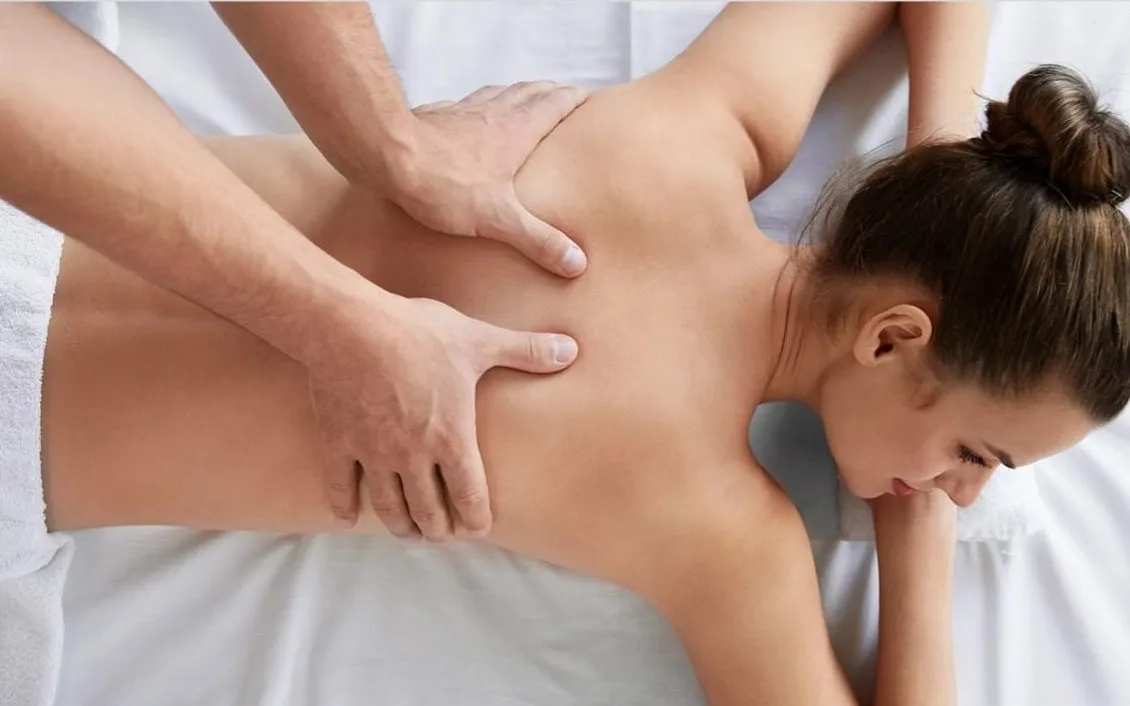
Why the neck returns in September, how often a massage is really needed, and when to see a doctor instead. From the practice at Schwedenplatz, Vienna.
Read more
Hormonal jet lag and liver Qi stagnation: why spring makes us tired — and a two-step treatment plan from both Western and Chinese perspectives.
Read more